Research Projects
Work on computational gene regulation, machine learning for multi-omic data integration, and spatial transcriptomics.
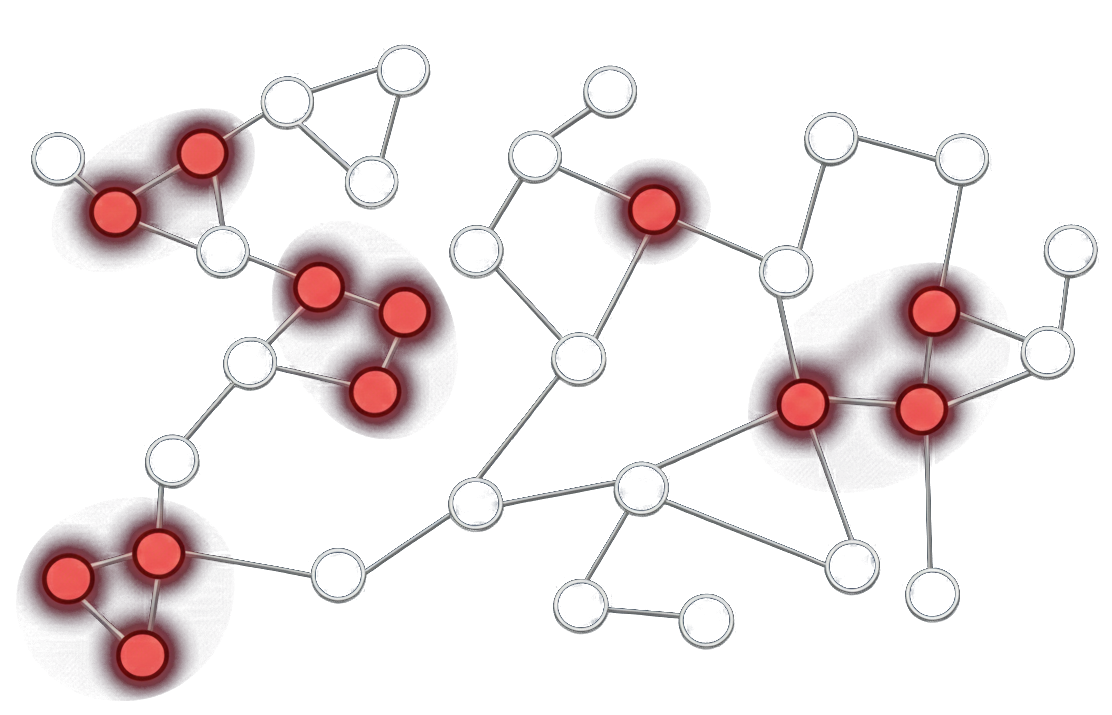
GRIDOT
Gene Regulatory Network Inference via Optimal Transport and Granger Causality
GRIDOT
Gene Regulatory Network Inference via Optimal Transport and Granger Causality
Understanding how genes are regulated requires linking transcriptional programs to underlying chromatin states, yet most single-cell studies profile these modalities separately. We introduce GRIDOT, a framework for reconstructing gene regulatory networks by integrating single-cell RNA-seq and ATAC-seq data without requiring paired measurements. GRIDOT aligns transcriptional and chromatin accessibility profiles to create a pseudo-multiomic representation, enabling the inference of directed regulatory relationships. The method identifies cis-regulatory element–gene and transcription factor–gene interactions and assembles them into regulatory networks at cell-type–specific or population scales. By connecting chromatin regulation to gene expression in a unified framework, GRIDOT facilitates biological interpretation of regulatory mechanisms from unpaired single-cell multiomic data. GRIDOT:
- Aligns distributions across conditions using optimal transport to stabilize downstream causal estimation.
- Infers directed edges with interpretable causal scores using graph-based Granger causality.
- Designed for noisy, high-dimensional omics regimes with multi-omic data integration.
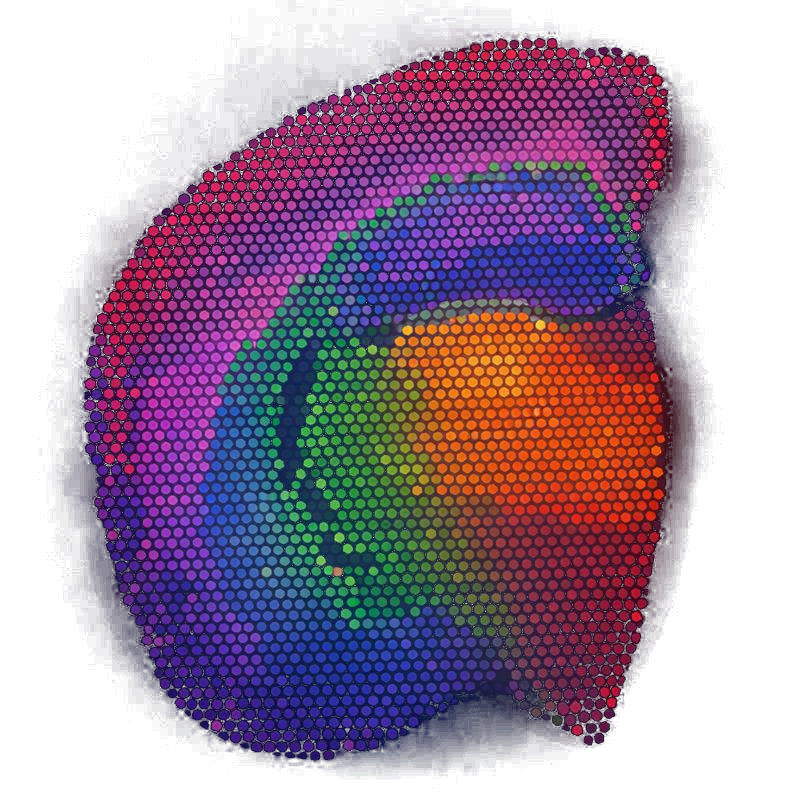
DRIFT
Diffusion-based Representation Integration for Foundation Models in Spatial Transcriptomics
DRIFT
Diffusion-based Representation Integration for Foundation Models in Spatial Transcriptomics
DRIFT is a scalable diffusion framework that denoises expression profiles and integrates the spatial topology of spatial transcriptomics (ST) data into existing pretrained scRNA-seq and ST foundation models without additional retraining. Foundation models that do not explicitly model spatial information benefit from both denoising and spatial integration, while methods that do so leverage DRIFT's denoised output. DRIFT constructs a spatial adjacency graph among tissue spots and applies a heat-kernel diffusion process that propagates gene-expression signals across local neighborhoods while preserving tissue boundaries. This produces spatially coherent yet biologically meaningful representations that can be directly embedded into pretrained foundation models without retraining, making our approach much more computationally scalable and accessible. DRIFT can:
- Enhance neighborhood consistency while preserving biological variation in spatial transcriptomics.
- Support robust downstream clustering and spatial pattern recovery without model retraining.
- Integrate with existing foundation models for scalable multi-omic analysis.

Odor-associated Learning & Memory
Gene Regulatory Network Analysis in Olfactory Circuits
Odor-associated Learning & Memory
Gene Regulatory Network Analysis in Olfactory Circuits
Modeling gene regulatory mechanisms in olfactory cortex and hypothalamus under distinct odor paradigms, focusing on activity-dependent programs and candidate regulators of learning and memory. This project integrates single-cell RNA-sequencing with gene regulatory network inference methods including optimal transport and graph neural networks to understand how transcription factors control cell-type-specific gene expression during odor learning and memory formation.
- Contrasts condition-specific transcriptional programs across odor learning paradigms.
- Prioritizes candidate regulators (transcription factors) for follow-up validation.
- Uses graph-based network inference on single-cell data for cell-type resolution.
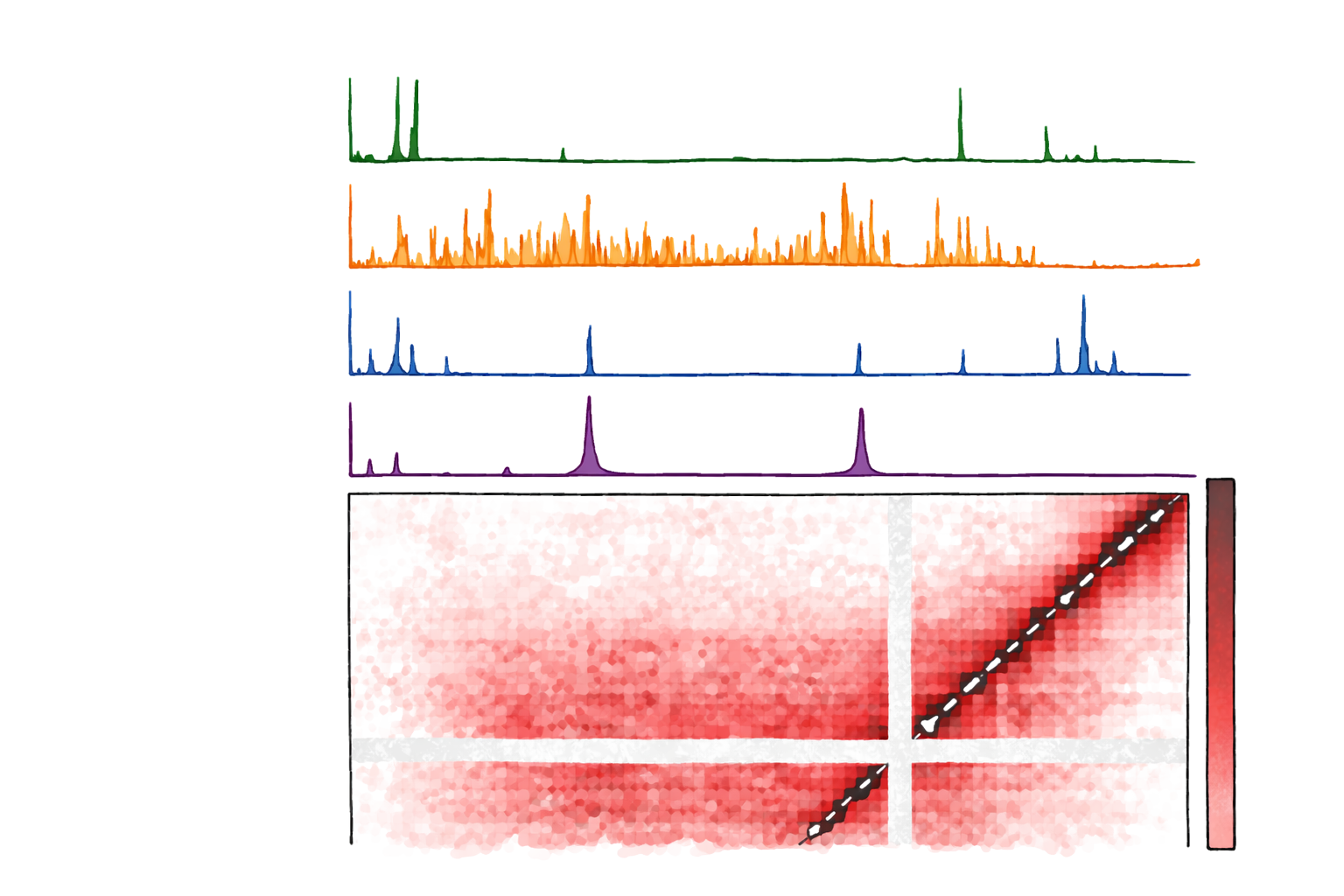
Synergistic TF Control in Drosophila
Multi-omic Gene Regulatory Modeling using ChIP-seq and Micro-C
Synergistic TF Control in Drosophila
Multi-omic Gene Regulatory Modeling using ChIP-seq and Micro-C
Multimodal modeling of Drosophila transcription factors involved in synapse formation and dosage compensation, integrating sequence, binding (ChIP-seq), and 3D genome features (Micro-C) for interpretable prediction of transcription factor synergy. This work uses graph neural networks to model how multiple transcription factors coordinately regulate gene expression through 3D chromatin interactions.
- Combines transcription factor binding profiles with 3D contact structure from Micro-C.
- Targets interpretable TF interactions and combinatorial effects on gene regulation.
- Applies graph neural networks to predict synergistic transcription factor control.